FROM GRIEF TO GLOBAL REFORM
Air Crash Victims’ Families’ Federation International is driving global aviation reforms to make victims’ voices central in shaping safer standards.
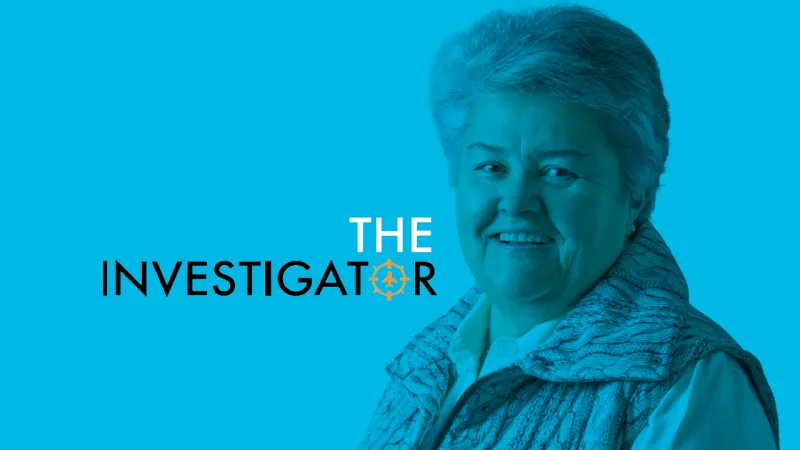
PILAR VERA PALMÉS Pilar Vera Palmés is the ACVFFI’s Chairwoman and President of Air Safety Foundation (FaSA20). She is a leading international advocate for aviation safety and the rights of air-crash victims and their families. A law graduate, she became involved in this work following the 2008 JK5022 tragedy. She has since served as President of the Association of People Affected by Flight JK5022, founded and chaired the ACVFFI, and established the A20 Aviation Safety Foundation. Recognised by ICAO for her contributions, she has played a key role in advancing global standards on victim assistance, accident investigation, and safety policy.
Each aircraft crash leaves a deep wound in the history of aviation. Those who experience the incident never forget it, and the same is true for those involved in managing the emergency and conducting the subsequent investigations. The purpose of these investigations is to determine the causes of the accident and extract lessons that make aviation safer.
Aviation now transports four billion passengers annually, and by 2050, this is projected to reach 12 billion. As traffic grows, preventing accidents becomes ever more urgent. What decisive actions are needed today to avert future tragedies?
It is difficult to acknowledge, but the memory of every air crash lives on in each safety improvement, every recommendation, every action taken to prevent new accidents and in every aviator who takes to the skies, committed to bringing passengers safely to their destination.
When an aircraft crashes, the consequences do not end with the impact. Behind every crash are dozens-sometimes hundreds- of lives cut short, and families left broken. Beyond the technical analysis and the black boxes, victims and their families must remain at the centre of both the investigation and the collective memory. Despite the uncertainties surrounding any accident, one truth is clear: passengers and crew pay with their lives for the chain of errors that led to the tragedy.
It is important to remember that death does not distinguish between passengers and crew members, and each life is unique in its path and meaning. Yet, official death tolls reduce them to nothing more than cold statistics. This dehumanisation deepens the pain for families and for those who knew the victims, whether through their professional contributions or their personal qualities.
When a loved one dies in an air tragedy, the immediate questions are: what were the failures in the safety systems? Why were proper precautions not taken?
Despite families being left with these questions and more, they rarely receive clear answers. It is questions like these that form the foundational blocks of air accident investigation authorities. A safe, credible and transparent civil aviation system rests on a robust accident investigation authority. Such an authority not only determines the causes of accidents, but also proactively identifies and warns of failures revealed by serious incidents or systemic problems, so that they can be corrected before they lead to another tragedy.
The complexity of aviation systems must never be used as an excuse to relax vigilance or ignore potential risks. States already have powerful tools such as authorising, certifying, auditing, monitoring, and sanctioning, which are sufficient to remove any entity that fails to uphold well-established aviation safety standards.
The Emotional Impact of Aircraft Crashes
The human tragedy that strikes a family after the loss of a loved one is indescribable. No one can expect that a simple farewell at the airport could so soon be followed by the devastating news delivered in a confusing, chaotic, and often inhumane manner. And in the rare cases of survival, the experience often resembles a scene of war more than an accident.
The testimonies of survivors I have met over the past 17 years provide compelling evidence of this reality. They describe moments when an aircraft fails to take off or, if it does, plunges into a deadly trajectory on the ground. They recount scenes of violent breaking, disintegration, and explosions of onboard fuel that ignite devastating fires.
Those who survive face another chain of suffering: Waiting for emergency services to arrive, hoping to be found, and above all, treated in time to save their lives. Surviving is just the beginning of a long struggle to recover both physically and mentally.
Despite the presence of such testimonies, leading global ccident investigation authorities and organisations rarely analyse the human consequences of air disasters. In their final reports, they may reference the emergency response, but do not evaluate its effectiveness. This may lie beyond their traditional remit, yet doing so would greatly help identify and correct failures in providing assistance to the victims and their families.
From Mourning to Meaningful Action
On 21 July 2015, I founded the Air Crash Victims’ Families’ Federation International (ACVFFI) in Madrid. It gained recognition by ICAO in February 2016. The Federation was the culmination of work that had begun in 2010. It gave affected families a voice at ICAO events —something previously unavailable to them. Before the Federation’s creation, they could attend, but could not intervene or present working papers to influence ICAO policies and standards.
On 23 September 2025, I had the honour of receiving the 44th ICAO Edward Warner Award from the ICAO President at the opening session of the 42nd ICAO General Assembly. This felicitation marks an important milestone in the history of the award, as it is the first time it has been given to a representative of civil society outside the aviation profession, and only the fourth time it has been awarded to a woman. For ACVFFI, this award is a significant recognition of its contributions to international organisations.
Among the working papers we presented at the 39th, 40th and 41st Assemblies, ACVFFI presented working papers which included a proposal for establishing minimum requirements for investigation authorities in all 193 ICAO Member States, emphasising independence, professionalism, rigour and transparency.
Another working paper called for the investigating State to translate the final reports into the languages of the victims’ families. Although several years have passed, ACVFFI remains committed to ensuring the implementation of both working papers approved by those Assemblies.
The revision of the now-defunct Circular 285, published by the ICAO’s Secretary General in 2001, led to the development of Doc 9998 and 9973 on Assistance to Victims and Families. Above all, this has been the most significant initiative promoted by ACVFFI, urging all 193 Member States to incorporate these standards into their regulations. Periodic drills are essential to ensure that in the event of an air emergency, national systems respond quickly, professionally and with empathy. Until recently, only Spain had successfully passed the ICAO’s Universal Safety Oversight Audit Programme (USOAP) concerning assistance to victims and their families.
Another key priority for ACVFFI is urging the remaining States to ratify the 1999 Montreal Convention. The Federation firmly believes that the treatment of victims and their families shall be standardised, particularly regarding their post-accident rights.
“We are not looking for culprits, we are looking for causes,” experts and investigators of civil aviation accidents are often heard saying. For families, however, this distinction is often difficult to accept, as what they need most is truth, justice, reparation and remembrance.
Over the years, I have witnessed terrible tragedies that could have been avoided. The recovery of victims’ bodies is both an inalienable right of families and a vital step in determining the cause of an accident. It is an obligation of States to protect this right.
“We cannot bring our loved ones back to life, but we can prevent other families from going through the same pain.” This phrase, which appears on the website of the Association of Affected by Flight JK5022, is also the driving force behind ACVFFI’s struggle, born from personal experience.